


 русский
 Français
 Español
 Português
 Deutsch
 عربى

News
Home / News / Industry News / How to Clean Dog Urine From a Couch: Steps, Odor Fixes and Drying Tips
Anyone who shares a sofa with a dog eventually meets this problem: you walk into the living room, and there it is, a small damp patch and a smell that seems to arrive before you actually see anything. We build upholstery and spot cleaning machines for a living, and the question we hear most often from friends, neighbours and customers is almost always the same one, how do I clean dog urine from a couch without making the fabric worse?
The short answer is that urine is less a stain than a liquid that keeps travelling. It moves down through the weave and into the foam, so anything you do on the surface has to account for what is sitting underneath. Get that part right, and the smell usually leaves with it.
A couch is not a flat piece of cloth. It is a stack of layers, usually a woven cover, a backing, some batting and a block of foam. Urine is mostly water, so it wicks straight down through the cover and spreads sideways once it reaches the foam. Blotting the top of the cushion might remove half of it on a good day.
The rest dries into uric acid crystals, and those crystals barely dissolve in plain water. On a dry afternoon nothing seems to be happening. Then the air turns humid, or somebody sits down and presses warm moisture into the foam, and the crystals start releasing odour again. That is why so many people report that the couch was fine for a week and then suddenly was not.
Two practical conclusions follow. First, treat the spot as though it is deeper than it looks. Second, choose something that breaks the uric acid down instead of something that covers the smell with fragrance.
Lift a seat cushion and look underneath. Most upholstery carries a small tag with a letter code, and that letter decides whether water is even allowed near the fabric.
Whatever the code says, test in a hidden corner first, let it dry completely, and only then work on the visible area. It costs five minutes and saves a very visible mistake.
Speed matters most in the first ten minutes, because the liquid has not yet reached the bottom of the foam.
If the accident happened days ago, the crystals are locked into the foam and a cleaner applied on top will simply sit there. Lay a warm damp towel over the patch, cover it loosely with cling film so it does not dry out, and leave it for half an hour. The moisture draws the salts back into solution, which is the only state in which an enzyme can actually go to work on them.
Expect two or three short sessions rather than one long soak. Repeated damp-then-dry cycles treat the cushion far more kindly than flooding it, and each round pulls a little more of the residue out. A small UV torch helps you find spots you cannot smell yet, and is worth having if your dog has marked the same corner more than once. If you want a broader walkthrough of upholstery care in general, our sofa cleaning guide covers fabric types, tools and drying in more depth.
| Approach | Best suited to | Typical dwell time | Watch out for |
|---|---|---|---|
| Enzyme cleaner | Fresh and dried urine, most odour cases | 10 to 15 minutes | Needs moisture to work; useless on dry fabric |
| White vinegar and water, 1:1 | Light surface odour, first rinse | 10 to 15 minutes | Acidic; test on wool and delicates |
| Baking soda, peroxide and a drop of dish soap | Stubborn colourfast synthetics | 5 to 10 minutes | Can bleach or lighten some dyes |
| Steam cleaning | Odour in the outer layers, sanitation | Per machine guidance | Over-wetting; heat can set protein stains |
| Spray, wash and suction extraction | Deep or repeated accidents in foam | Until the recovery tank runs clear | Slow drying if you over-apply solution |
Enzymes are the closest thing to a real fix, because they consume the uric acid rather than masking it. Give them time and moisture, and do not rinse them away seconds after applying.
Baking soda is useful, but as a drying aid rather than a cure. Sprinkle a generous layer over a spot that is already clean and still faintly damp, leave it overnight, and vacuum it up in the morning. It pulls residual moisture and some of the smell with it. What it will not do is reach crystals sitting deep in the foam.
Ventilation does more than most people expect. Cushions propped on edge in front of an open window lose odour noticeably faster than cushions left flat on the frame. Skip the candles and plug-in fresheners, at least until the source is gone, because they make it impossible to judge whether the treatment worked.
There is a point where blotting and patience stop paying off, usually after the second or third accident in the same place, or when the urine has reached the foam core. That is when extraction earns its keep: the machine sprays a small amount of solution into the cushion, works it loose, and immediately pulls the dirty liquid back out. Nothing stays behind to grow mildew, and the odour source leaves with the water.
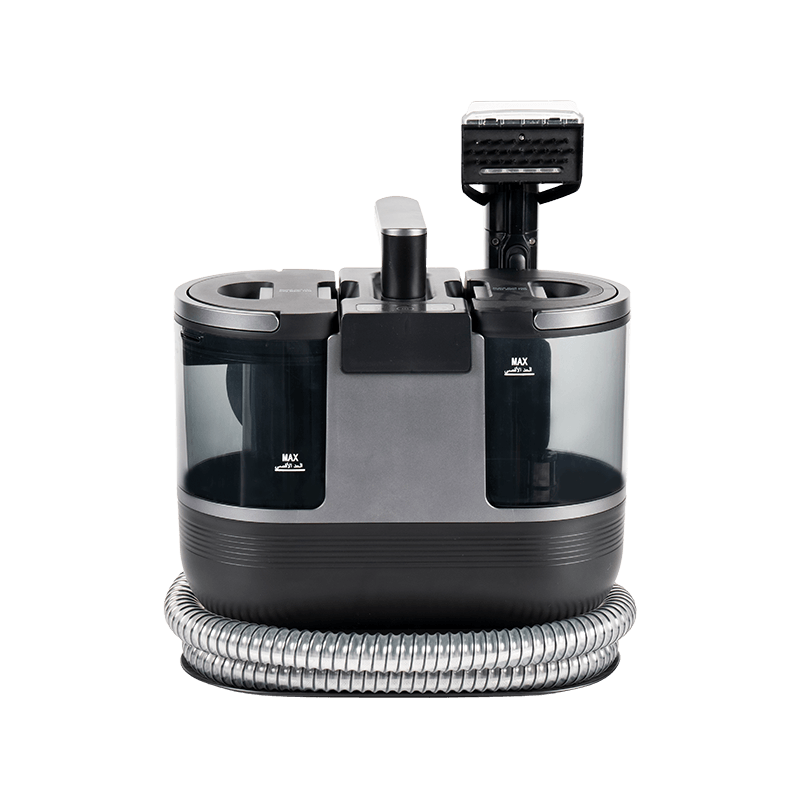 DY506E Sofa, Carpet, and Mattress Cleaning MachineA 3-in-1 spray, scrub, and suction unit for pet accidents on upholstery, with 60°C hot water, 15 kPa suction, and separate clean and dirty tanks.View Product →
A compact sofa and mattress unit like the DY506E is sized for exactly this job, and it is the type of machine we build most often for households with pets. If you are dealing with a large sectional or a set of cushions at once, a spray, wash and suction model such as the DY503B handles wet and dry pickup in one pass and cuts the number of refills you need.
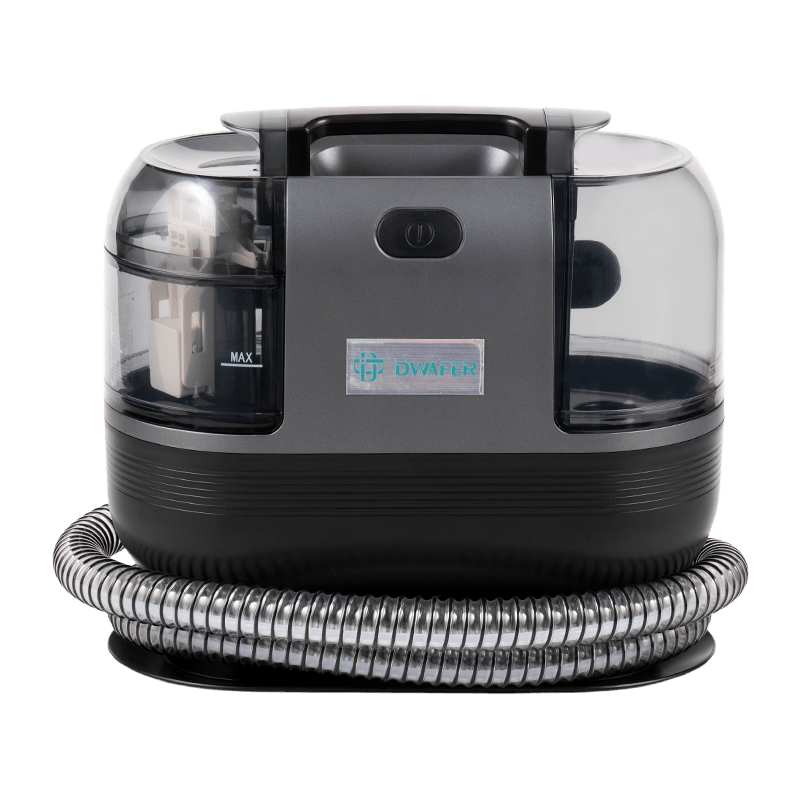 DY503B Wet and Dry Upholstery Cleaning MachineA portable 3-in-1 spray, wash, and suction cleaner for larger sectional or cushion jobs, with 1250 ml clean tank and 15 kPa vacuum.View Product →
Steam is a reasonable follow-up for the outer layers once the liquid is gone, since heat and moisture together deal with bacteria that contribute to lingering odour. Our article on how steam cleaners remove stubborn stains and odours explains where steam helps and where it can do more harm than good.
Damp upholstery is its own problem. Aim to have the cushion dry within a day, using airflow and a little warmth in the room rather than direct heat on the fabric. Stand cushions on edge so air reaches both faces, and turn them after a few hours.
Most couch accidents are solved by doing three things properly: pulling the liquid out instead of pushing it around, giving an enzyme enough time and moisture to do its job, and drying the cushion completely before anyone sits on it again. Everything else is detail. Take it slowly, work in short rounds, and the couch will come back to you long before the smell does.
 2025-11-12
Industry News
2025-11-12
Industry News
2025-11-12
Industry News

 [email protected]
 +86-13736068086
 No. 2, Zone 1, Hongxi Industrial Park, Chunhu Subdistrict, Fenghua District, Xian City, Shaan Xi Province, China.
 Custom Home Carpet Cleaning Machine/Appliance Manufacturers
 Previous
