


 русский
 Français
 Español
 Português
 Deutsch
 عربى

News
Home / News / Industry News / How to Get Baking Soda Out of Carpet: A Step-by-Step Guide for a Residue-Free Finish
Baking soda earns its place in almost every cleaning cupboard. It lifts stale odors from rugs, cushions and car seats, it costs next to nothing, and it never leaves a chemical smell behind. The trouble usually starts the next morning, when daylight crosses the room and the carpet looks as though someone dusted it with flour.
We spend our working days around carpet and upholstery cleaning equipment, and the question of how to get baking soda out of carpet comes up far more often than you might expect. The answer is not complicated, but it does reward patience. Baking soda is much finer than the crumbs and grit a vacuum is built to handle, and that single fact explains why it seems to hide from you.
Sand and table salt sit on top of the pile. Baking soda does not. Its particles are measured in tens of microns, small enough to slip between fibers, and light enough to ride the static charge that builds up on synthetic yarns.
Once you understand this, the method changes. A single quick pass with the vacuum lifts the visible layer and leaves the rest behind, ready to work its way back up the moment someone walks across the room.
Ten minutes of preparation saves an hour of frustration later. Gather these first so you are not hunting for tools with powder already in the air:
If the powder was applied after spot cleaning, or if the room has been humid, give the carpet time to dry fully. Damp baking soda clings to fibers and smears instead of releasing. A fan and an open window for an hour usually do the job.
Speed is the most common mistake. Move the head slowly enough that you can hear the suction working, overlapping each pass by about half a width, then repeat at right angles to the first direction. Four to six slow passes lift dramatically more powder than one brisk sweep. Empty the bin before you begin and check the filter afterwards, because a clogged filter turns a strong vacuum into a weak one within minutes.
Work a soft brush attachment or a rubber squeegee across the pile in one consistent direction. You will see the powder gather into soft lines, which is exactly what you want. Vacuum those lines up before moving to the next section.
Powder drifts. Run the crevice tool along the skirting board, around furniture legs and into the seams where carpet meets tile. These small pockets are often the source of the white dusting that keeps reappearing in the middle of the room.
If a faint film remains after several vacuum passes, a light damp extraction is the answer. Mist plain water sparingly over the area, agitate gently with a soft brush, then pull the moisture straight back out. Work in small sections and never leave the carpet wetter than a wrung-out cloth would.
Air movement matters more than heat. Open a window, run a fan, and keep feet and pets off the area until it is genuinely dry. A carpet that stays damp for hours is an invitation for odors and mildew, which defeats the whole purpose of the exercise.
Pastes made from baking soda and water are wonderful on a small greasy mark, but they dry into a crust that sits deep in the pile. Let it dry completely rather than attacking it while tacky, then break the crust up with a soft brush, vacuum thoroughly, and finish with a plain-water rinse and extraction. Scrubbing a damp paste only pushes it further down.
Not every carpet tolerates the same amount of moisture. When in doubt, test a small hidden patch first and always err on the drier side.
| Fiber type | Moisture tolerance | Recommended approach |
|---|---|---|
| Nylon and polyester | Good | Vacuum in two directions, then a light damp extraction pass |
| Wool | Moderate | Dry vacuum and brush first; damp clean small areas only and dry fast |
| Olefin / polypropylene | Low | Stay dry where possible; excess water can affect the backing |
| Cotton, viscose and rayon blends | Low | Dry methods only; consider a professional for larger areas |
If white patches keep surfacing after several honest vacuum passes, the powder has likely reached the backing or the underlay. At that point, surface suction alone will not solve it. A machine that sprays clean water, agitates and then extracts in one motion is the practical way to flush the residue out without soaking the floor.
This is the sort of work our team designs equipment for, so we have a fair idea of what matters: steady suction, controlled spray and a recovery tank that actually holds what it pulls. A spray-wash-suction unit handles the rinse step in one pass, which is far gentler on backing than repeated wetting and blotting.
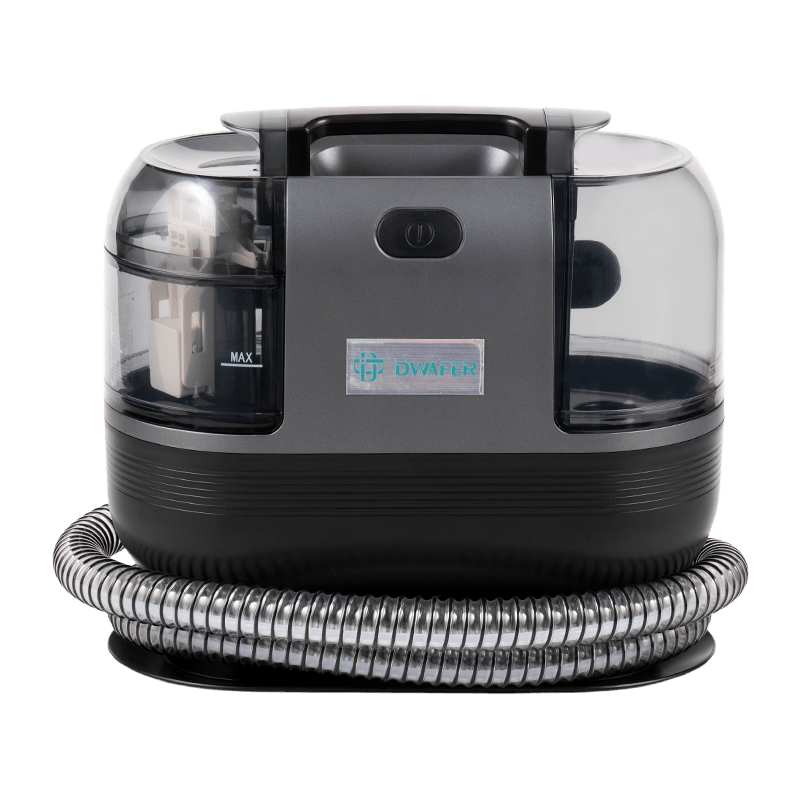 DY-503B Spray, Wash and Suction Wet/Dry CleanerA compact heated 3-in-1 spot and carpet cleaner with spray, scrubbing and recovery suction for one-pass rinsing.View Product →
For homes with a mix of rugs, sofas and mattresses to keep clear, a compact household unit is usually the more sensible purchase. You can browse the full range of spot and carpet cleaners to compare formats, tank sizes and steam options side by side.
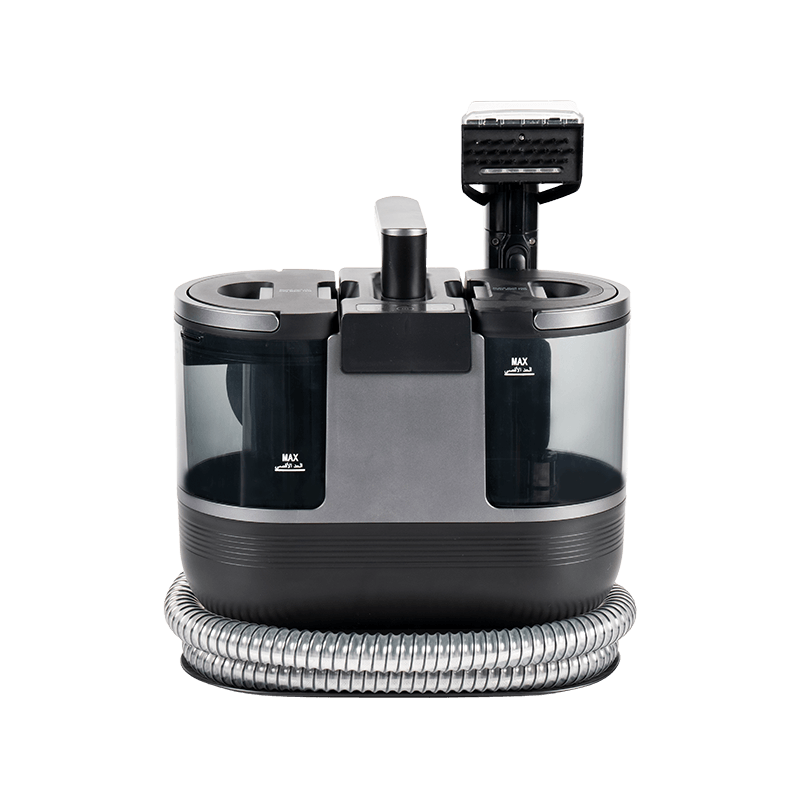 DY-506E 3-in-1 Sofa, Carpet and Mattress CleanerA compact household cleaner for sofas, carpets, mattresses and upholstery, using hot water, steam, spray and suction with three brushes.View Product →
Larger rooms and deeper pile benefit from a machine with stronger cold-water suction, since it can pull more moisture out in fewer strokes. If you would rather understand the full routine before investing in equipment, our guide on deep cleaning your carpet yourself at home walks through the sequence from pre-vacuum to final dry.
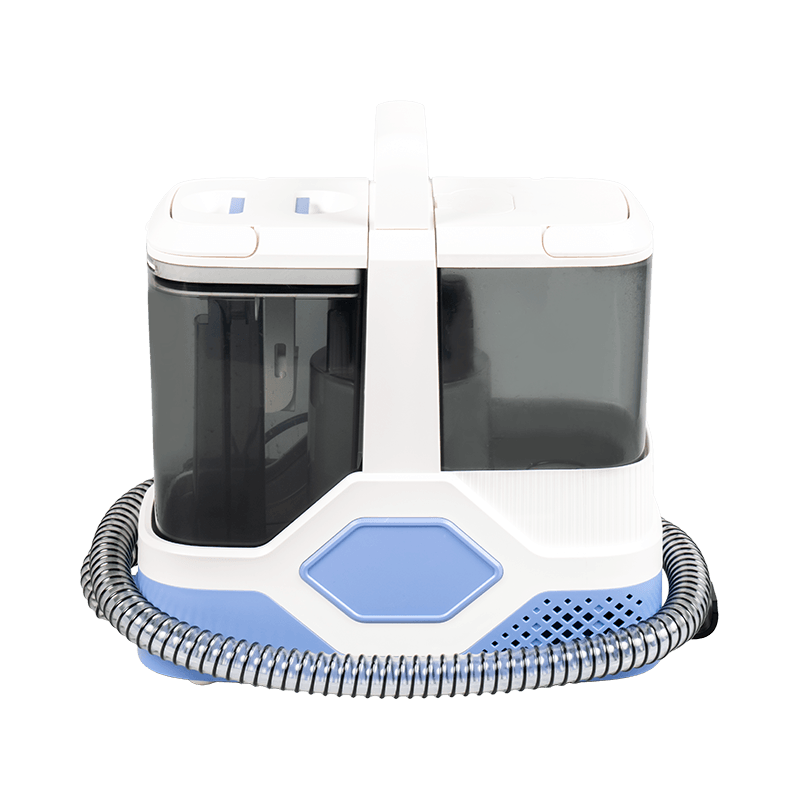 DY-511 Professional Cold-Water Carpet and Sofa CleanerA cold-water spot cleaner for sofas, chairs and car seats, with strong suction and large tanks for upholstery stain removal.View Product →
If the carpet is wool, antique, or glued down over a delicate subfloor, a professional with proper drying equipment is still the safer call. Knowing when to stop is part of doing the job well.
Most of the frustration around baking soda comes from applying far more than the job needs. A thin, even dusting through a small sieve or flour sifter works as well as a heavy layer, and it takes a fraction of the time to remove. Leave it for fifteen to thirty minutes rather than overnight, keep pets and bare feet away while it sits, and vacuum twice with a clean machine instead of once in a hurry.
None of this is difficult. It is simply a matter of slowing down, working in two directions, and finishing with a light rinse instead of a soaking. Do that, and the pale dusting that seemed impossible to shift will be gone for good.
 2025-11-12
Industry News
2025-11-12
Industry News
2025-11-12
Industry News

 [email protected]
 +86-13736068086
 No. 2, Zone 1, Hongxi Industrial Park, Chunhu Subdistrict, Fenghua District, Xian City, Shaan Xi Province, China.
 Custom Home Carpet Cleaning Machine/Appliance Manufacturers
 Previous
