


 русский
 Français
 Español
 Português
 Deutsch
 عربى

News
Home / News / Industry News / How to Deep Clean Carpet at Home: A Practical Step-by-Step Guide for Fresher Floors
Deep cleaning a carpet is not about scrubbing harder. It is about removing what a vacuum cannot: oily film, fine grit, pet dander, and spills that have dried into the backing. A good deep clean follows a simple order: dry soil first, then moisture, then fast drying. Do it before a room starts looking dull, usually every 6 to 12 months in busy homes and every 12 to 18 months in low-traffic rooms.
If you prefer a shorter room-by-room version, see our guide to deep cleaning carpet yourself at home. The steps below follow the same practical logic we use when testing portable carpet cleaners and spot cleaners.
Before you rent or buy anything, check the care label or manufacturer guidance. Wool, nylon, polyester, olefin, and natural fiber rugs do not all respond well to the same amount of water, heat, or agitation. Wool and other natural fibers can shrink or brown if they stay wet too long. Viscose and silk are best left to a professional. Synthetic carpets are usually more forgiving, but they still need a test patch in a hidden corner.
Also be honest about the job. A light maintenance clean is not the same as reviving a carpet that has collected years of traffic, pet accidents, or road salt. If the carpet is heavily soiled, plan for two shorter cleaning sessions rather than one soaking wet marathon.
| Stage | Main job | Typical time |
|---|---|---|
| Dry prep | Move furniture, vacuum slowly, clean edges and under furniture | 20–30 min |
| Spot treat | Blot spills, test solutions, treat stains before wetting the whole room | 10–20 min |
| Pre-spray | Apply cleaning solution, let it dwell, agitate gently | 10–15 min |
| Rinse and extract | Flush residue, extract water, overlap passes | 20–40 min |
| Dry | Use airflow and keep foot traffic off the carpet | 6–12 hours |
Move furniture and vacuum the entire area, including the parts you think look clean. Go slowly. One slow pass with a good brush roll removes far more grit than three rushed passes. Vacuum along edges, into corners, and under furniture with a crevice tool. If the carpet has a thick pile, vacuum in two directions to lift the fibers.
This step matters because dry soil acts like sandpaper. If you wet a gritty carpet and then scrub it, you can dull the fibers and push dirt deeper. Empty the vacuum bin or change the bag before you start so airflow stays strong.
Work on spills first. Blot, do not rub. Use a white cloth or paper towel and press down to absorb as much liquid as possible. For food or drink stains, a mild detergent solution and cool water are often enough. For pet accidents, use an enzyme cleaner and give it time to work. For grease, a small amount of dish soap can help, but rinse it thoroughly afterward.
Test any solution in a hidden spot. Apply a little, wait a few minutes, and blot with a white cloth. If color transfers or the fiber looks different, stop. Do not mix cleaning chemicals, and do not use more detergent than the label recommends. Residue left behind attracts new dirt and can make the carpet feel sticky.
Mix the cleaning solution exactly as directed. Mist it evenly over a small section, then let it dwell for the time on the label, usually five to ten minutes. Do not let the carpet become soaked. You want the solution to break down oils and suspend soil, not to flood the backing.
For stubborn traffic lanes, agitate gently with a soft brush or a machine’s brush head. Keep the motion light. Heavy scrubbing can fuzz the fibers. A spray-wash-suction all-in-one machine can save a pass, but only if you keep it moving and avoid over-wetting.
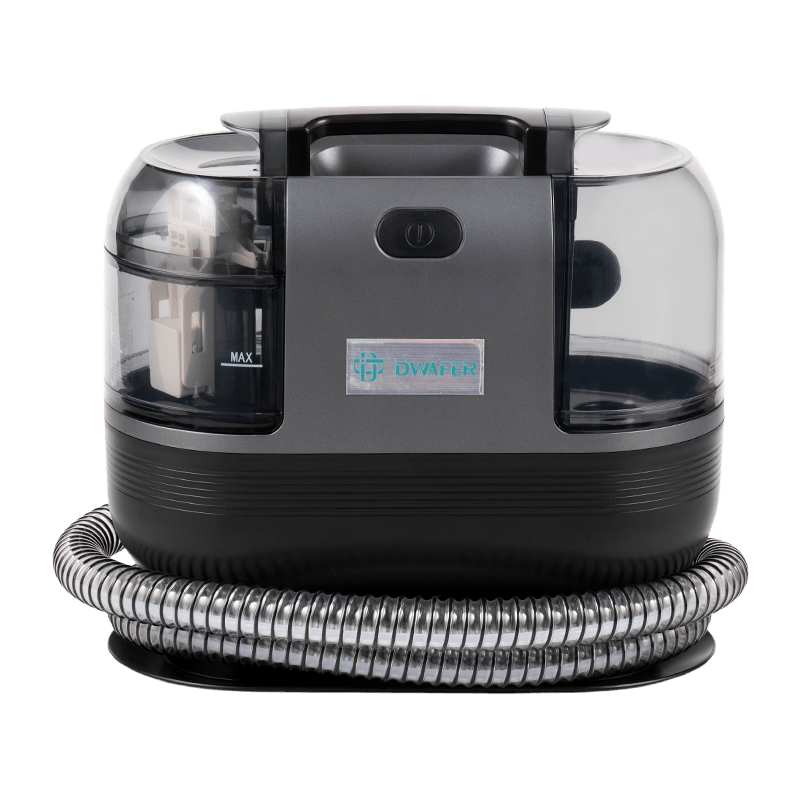 DY-503B Heated Spray, Wash and Suction Carpet CleanerA portable 3-in-1 spot and carpet cleaner with heated spray, scrubbing, and suction for controlled deep-cleaning passes and extraction.View Product →
This is where a deep clean either works or leaves the carpet stiff and soapy. Use clean water in the tank and make slow, overlapping extraction passes. Push forward slowly and pull back slowly. On many machines, a dry pass after the wet pass pulls out more water. Empty the dirty tank before it is full, and check the solution tank so you are not spraying detergent when you mean to rinse.
If you are cleaning a large room or a rental property, a professional-style cold-water carpet and sofa cleaner is often a better fit than a small spot unit. It gives you more water capacity and a wider cleaning path, which means fewer refills and more even extraction.
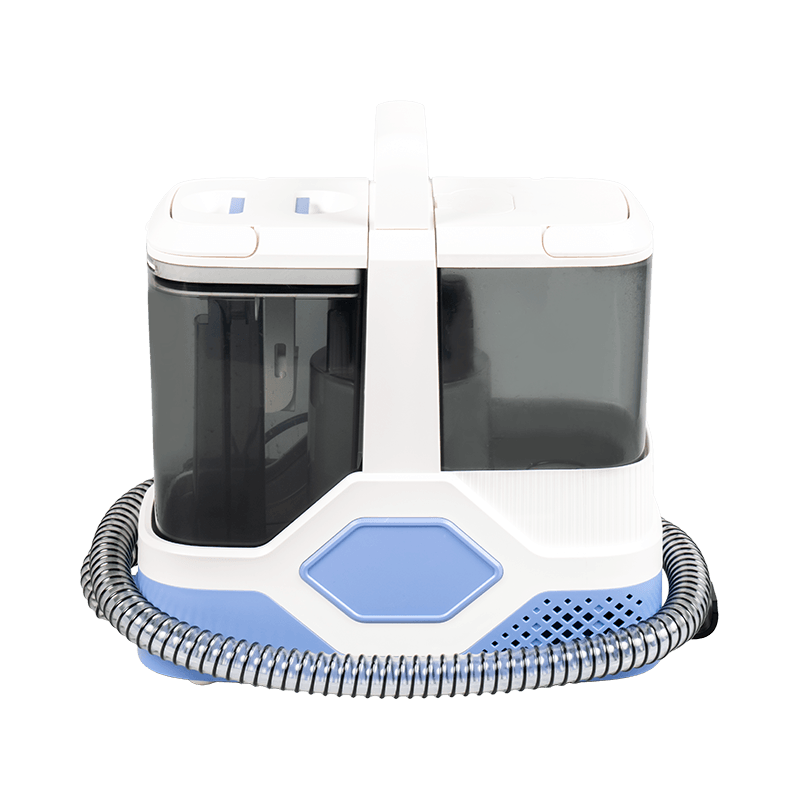 DY-511 Professional Cold-Water Carpet and Sofa CleanerA cold-water upholstery spot cleaner with large tanks and strong suction for sofas, chairs, and car seats when a small spot unit is insufficient.View Product →
Fast drying is not optional. Open windows if the weather allows, set up fans, and use a dehumidifier in humid rooms. Keep furniture off the carpet until it is dry, or place foil or plastic under the legs. Stay off the carpet for at least six hours, longer for thick pile or cool weather. Do not use high heat to speed things up; heat can set stains and damage some fibers.
If the carpet still feels damp after 24 hours, it was probably too wet. Run fans longer, reduce humidity, and avoid repeating the same mistake next time. A carpet that stays damp can develop odors and mildew.
At Dwafer, we build portable carpet and upholstery cleaners for homes and small professional teams, so we tend to look at machine choice through real storage space, water capacity, and drying time. A large machine is useful for whole-room cleaning, but it is a burden if you only have a few rugs and a sofa. A compact unit is easier to store and quicker to set up for small jobs.
If your deep cleans mostly involve sofas, mattresses, and small carpeted areas, a household sofa, carpet, and mattress cleaner is often the practical choice. Match the machine to the job, not to the biggest stain you have ever seen.
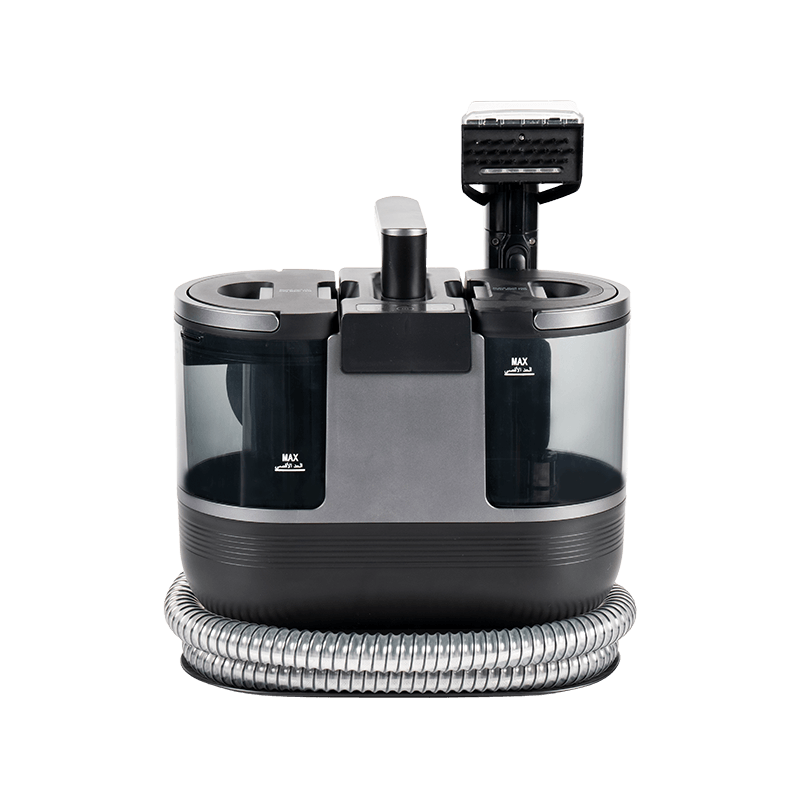 DY-506E Household Sofa, Carpet and Mattress CleanerA 3-in-1 household cleaner using hot water and steam for sofas, carpets, and mattresses, suited to smaller upholstery and carpeted areas.View Product →
Call a professional for wool, silk, viscose, or other delicate natural fibers; widespread urine contamination; mold or long-standing pet odor; carpet glued directly to concrete; or a large area that cannot be dried within 12 hours. Also call before trying a DIY fix on a stain you cannot identify. A pro can often save a carpet that a strong homemade solution would ruin.
Vacuum high-traffic paths two or three times a week, use mats at doors, take shoes off, rotate rugs, and treat spills immediately. Keep a small spot cleaner for emergencies and save the full extraction pass for a scheduled day when windows can be open and furniture can stay off the carpet.
Deep cleaning carpet is a moisture management job as much as a cleaning job. Remove dry soil, use enough solution to break down oils but not enough to soak the backing, rinse well, and dry fast. If you do that, the carpet will look better, feel softer, and stay cleaner for longer.
 2025-11-12
Industry News
2025-11-12
Industry News
2025-11-12
Industry News

 [email protected]
 +86-13736068086
 No. 2, Zone 1, Hongxi Industrial Park, Chunhu Subdistrict, Fenghua District, Xian City, Shaan Xi Province, China.
 Custom Home Carpet Cleaning Machine/Appliance Manufacturers
 Previous
