


 русский
 Français
 Español
 Português
 Deutsch
 عربى
عربى
News
Home / News / Industry News / How Does a Bagless Vacuum Cleaner Work? The Science of Cyclonic Suction
If you have ever tipped a clear dust canister into the bin and watched the dirt tumble out, you have already met the clever engineering inside a bagless vacuum cleaner. As a manufacturer of cordless and portable cleaning appliances, we build these machines every day, and we still find the physics inside them genuinely elegant. In this guide, we will walk you through exactly how a bagless vacuum cleaner works, from the moment air rushes into the nozzle to the moment clean air leaves the exhaust, plus a few simple habits that keep one performing like new for years.
Every vacuum cleaner, bagged or not, relies on the same fundamental idea: a difference in air pressure. A motor spins a fan at very high speed, pushing air out of the machine. Removing air from the inside creates a partial vacuum, so the higher pressure of the room pushes fresh air back in through the nozzle. As that air rushes in, it carries loose dust, crumbs, pet hair, and grit along with it.
What sets a bagless model apart is what happens next. In a traditional bagged machine, the dirty air is deposited into a disposable bag that doubles as the primary filter. In a bagless machine, there is no bag to clog. Instead, the machine separates dirt from air mechanically, using fast-spinning air. If you would like a broader refresher on the airflow and brushroll science behind vacuuming carpets, we cover that in detail in a separate guide.
The technology that truly defines a bagless vacuum is cyclonic separation. Rather than trapping dirt in a porous bag, the machine forces incoming air into a cone-shaped chamber, where it spins at extremely high speed, like a small, contained tornado. This spin creates centrifugal force, which throws heavier particles outward against the chamber walls. Once they strike the wall, the particles lose momentum and fall by gravity into the bottom of the clear dust canister, while lighter, partially cleaned air continues through the center of the cyclone and onward through the machine.
Because dirt is flung out of the airflow rather than caught in a bag, the air path stays open. That is why many bagless models maintain strong, consistent suction even as the canister fills.
The journey of a single dust particle through a typical bagless vacuum looks like this:
Many modern designs add a bank of smaller secondary cyclones behind the main one. The first-stage cyclone removes the bulk of the debris; the smaller cyclones spin the air again to pull out fine dust before it ever reaches the main filter. This two-stage approach keeps filters cleaner for longer, which is one of the biggest reasons bagless machines hold their cleaning performance over time.
Cyclonic separation does the heavy lifting, but it is rarely the last line of defense. After the dust cup, the air typically passes through a series of filters:
This staging matters for two reasons. First, it protects the motor, which depends on a steady flow of clean air to stay cool. Second, it protects the air you breathe: a well-maintained filtration system means the air leaving the vacuum is considerably cleaner than the air that entered it, a detail that matters greatly in homes with allergy sufferers or pets.
Neither design is inherently better; they solve the same problem in different ways. Here is how they stack up on the points buyers ask us about most often:
| Aspect | Bagged Vacuum | Bagless Vacuum |
|---|---|---|
| How dirt is captured | Disposable bag acts as the main filter | Cyclone spins dirt out of the airflow into a canister |
| Suction as it fills | Drops as bag pores clog | Stays steadier because the air path remains open |
| Ongoing running costs | Requires a steady supply of replacement bags | Minimal; most filters are washable or long-life |
| Emptying the machine | Sealed bag is removed and discarded | Clear cup is detached, emptied, and rinsed |
| Allergen handling | Sealed bags release little dust when removed | Emptying can release a puff of dust without care |
For most households, the appeal of going bagless comes down to transparency and cost: you can see exactly when the canister is full, and you never have to remember to buy bags again.
A bagless vacuum is only as good as its upkeep, and the routine is refreshingly short. These are the habits we recommend for every cyclonic machine we build:
For a fuller, model-by-model walkthrough, our complete guide to vacuum maintenance covers filter care, brushroll cleaning, and proper storage in depth.
The same physics that powers a full-size upright now sits inside compact, cordless machines. Scaling a cyclone down is genuine engineering work: the chamber must be narrow enough to keep air spinning fast on battery power, yet efficient enough not to starve the motor or drop suction.
That balance is something we tune every day on our own production lines. Our ultra-light wireless upright, the DY809A, is a good example of a compact cyclonic path keeping suction consistent across floors and rugs:
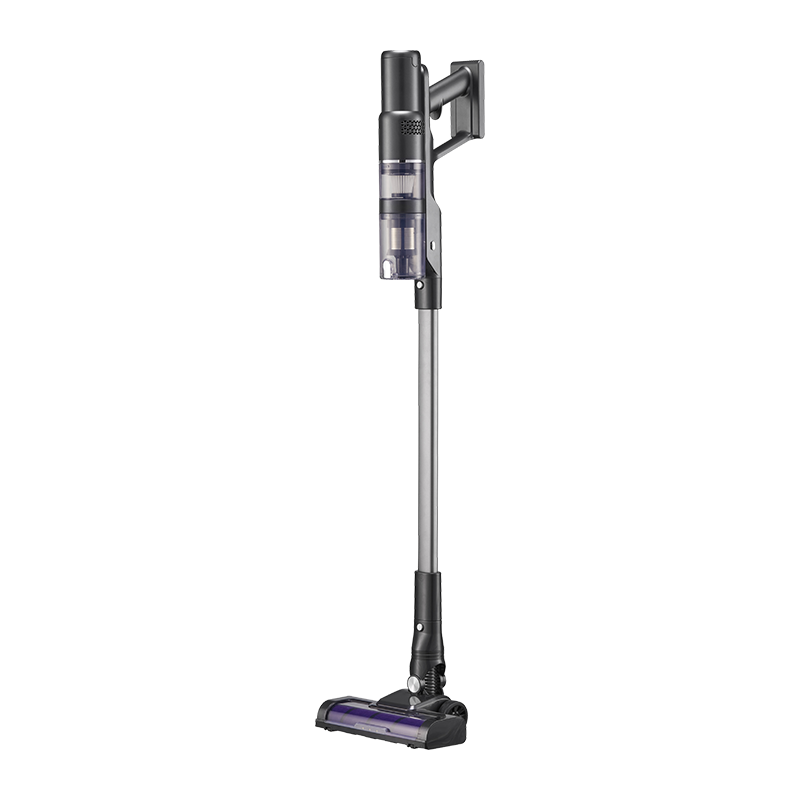 DY-809A Ultra-Light Cordless Upright Vacuum CleanerThis 200W BLDC upright runs 11-25KPa suction for 13-40 minutes at under 72dB and 2.64kg, fitting the discussion of compact cyclonic paths keeping suction consistent across floors and rugs.View Product →
Handheld machines follow the same logic in a smaller footprint. The DY807A pairs a multifunctional all-in-one body with a compact cyclone, so it moves smoothly from floors to upholstery, stairs, and car interiors:
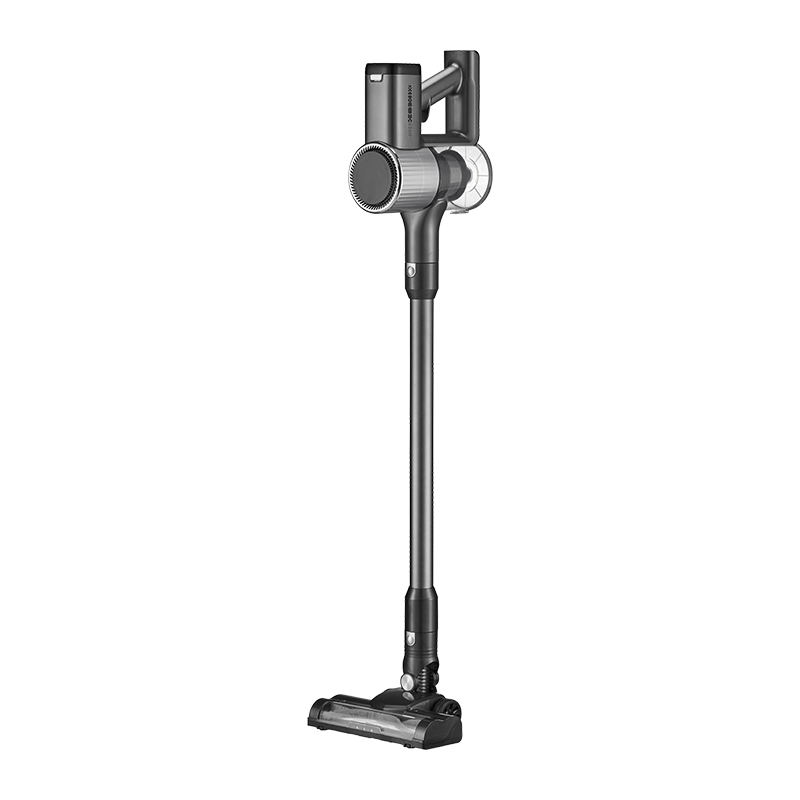 DY-807A Multifunctional Handheld Cordless Vacuum CleanerWith a 250W BLDC motor, 10-28KPa suction, 400ml cup, and 2.3kg weight, this all-in-one cordless machine suits the handheld cleaning of floors, upholstery, stairs, and car interiors described here.View Product →
For quick, high-frequency cleanup tasks, a strong little motor matters just as much. Our DY105 portable vacuum is built around a high-speed motor delivering powerful suction in a small body, a neat demonstration of how much pickup a miniature cyclone can achieve:
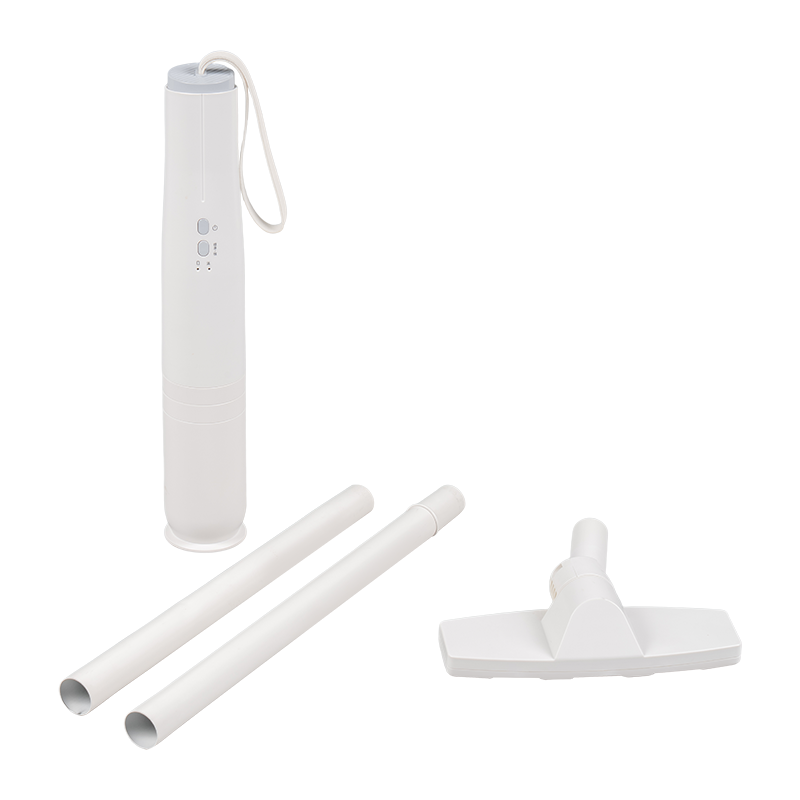 DY-105 High-Speed Powerful Suction Portable Vacuum CleanerA 0.55kg portable vacuum with 100W output and 15Kpa suction, offering 12-25 minutes runtime, demonstrating how much pickup a small high-speed motor can achieve for quick cleanup tasks.View Product →
When we develop new models for brand owners, importers, and retail chains, cyclone geometry, filter layout, and motor efficiency are always the first three things we refine, because together they decide whether a compact machine cleans like a full-size one.
A bagless vacuum cleaner is a study in doing more with less: no bags to buy, a clear view of what has been collected, and a spinning cyclone that keeps air moving long after a bag would have clogged. Empty the canister on time, keep the filters clean, and the same simple physics will keep working for you year after year. And if you are a brand owner, importer, or retailer looking for a manufacturing partner with hands-on experience in cordless and portable cleaning appliances, our team would be glad to help, from cyclone design through to certified, shipment-ready production.
 2025-11-12
Industry News
2025-11-12
Industry News
2025-11-12
Industry News
2025-11-12
Industry News
2025-11-12
Industry News
2025-11-12
Industry News

 [email protected]
  +86-13736068086
  No. 2, Zone 1, Hongxi Industrial Park, Chunhu Subdistrict, Fenghua District, Xian City, Shaan Xi Province, China.
  Custom Home Carpet Cleaning Machine/Appliance Manufacturers
 Previous