


 русский
 Français
 Español
 Português
 Deutsch
 عربى
عربى
News
Home / News / Industry News / How Much Does It Cost to Shampoo Carpet? DIY vs Professional Prices Explained
Ask a neighbor, a landlord and a cleaning crew the same question, how much does it cost to shampoo carpet, and you will get three different answers. Nobody is guessing. Shampooing covers everything from a rented machine on a Saturday morning to a truck-mounted hot water extraction crew, and those two routes sit at very different price points.
The good news is that the numbers are predictable once you know what you are buying. Across most of the United States, a professional shampoo runs roughly $0.20 to $0.50 per square foot, or about $35 to $75 per room. Doing it yourself with a rented machine usually lands between $40 and $80 for a day, solution included. Buying your own machine changes the math entirely after the first year.
| Option | Typical cost | Covers roughly | What to know |
|---|---|---|---|
| Rental machine, one day | $40-$80 | 3-4 rooms | Cheapest one-off; you supply the labor and the drying time |
| Buying your own machine | $150-$400 upfront | Unlimited use | Pays for itself in three to five rentals |
| Professional, per room | $35-$75 | One average bedroom or living room | Minimum call-out charges usually apply |
| Professional, per square foot | $0.20-$0.50 | Whole-home open plan | $0.60-$0.75 in expensive metros |
| Whole-home average, 3-4 rooms | $150-$300 | 500-800 sq ft of carpet | Add-ons push this higher quickly |
| Heavy soil or pet restoration | $0.50-$1.00 per sq ft | Problem areas only | May need repeat visits and enzyme treatment |
Treat the middle column as a reality check rather than a quote. Two homes on the same street can differ by $100 simply because one has stairs and a long-haired dog and the other does not.
Renting is the cheapest way to shampoo a carpet once. A machine from a hardware store or supermarket costs about $30 to $45 per day, and you will add $10 to $20 for shampoo solution plus another $10 to $15 if you want an upholstery attachment for sofas and stairs. Budget two to four hours of your own labor for a typical three-room job, then six to twelve hours of drying time before the room feels normal again.
Buying your own machine is where the cost curve bends. Entry-level consumer units start around $150, mid-range spray, wash and suction models sit between $200 and $400, and most of that price difference comes down to three things: tank capacity, suction strength, and how thoroughly the machine recovers dirty water instead of leaving it in the pad. If you shampoo twice a year, a $300 machine pays for itself in roughly four rentals and then keeps going.
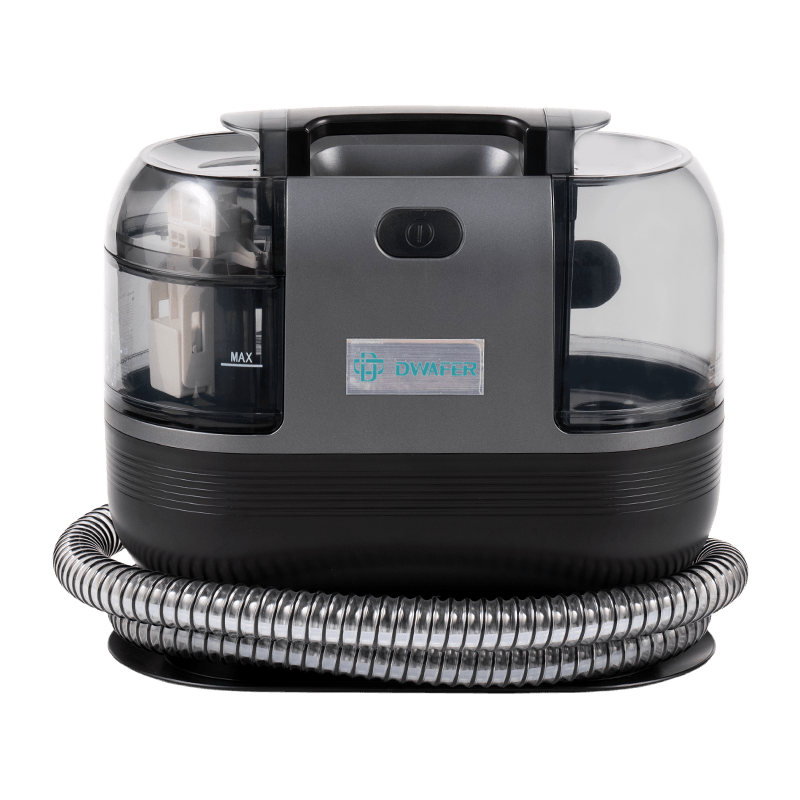 DY-503B Heated 3-in-1 Spray, Wash and Suction CleanerPortable 1200W wet and dry cleaner with 15kPa suction, 1250ml/750ml tanks and 60°C heated water for spot and carpet cleaning.View Product →
What DIY does not buy you is extraction power. Consumer machines move less air and lift less water than commercial equipment, which is exactly why rented and owned units are so much cheaper. You are trading a lower invoice for more of your own time, a longer drying window, and a slightly higher risk of over-wetting the backing if you rush the passes.
Professional pricing comes in two flavors: per room and per square foot. Per room is easier to budget, typically $35 to $75 for a standard bedroom or living room. Per square foot is more accurate on large open-plan floors, at $0.20 to $0.50 in most markets. Almost every company also has a minimum call-out charge, usually $75 to $150, which is why booking one small bedroom on its own rarely makes financial sense.
Add-ons are where a quote quietly drifts upward. Ask for them up front:
The cleaning method moves the price too. Low-moisture encapsulation or dry cleaning is usually the cheapest option and dries within an hour, but it lifts surface soil better than it rinses deep dirt. Hot water extraction, the method most people mean by steam cleaning, costs more and takes longer to dry, yet it pulls far more soil out of the backing. Genuine high-temperature steam adds a sanitizing step that is worth paying for in homes with allergies, pets or young children.
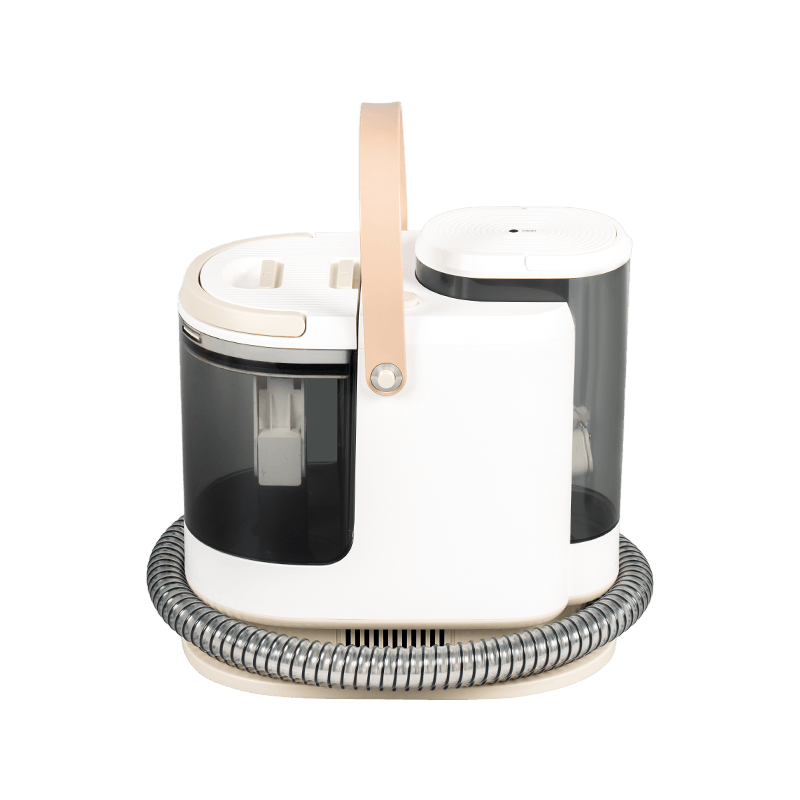 DY-507AC High-Temperature Steam Sterilizing 3-in-1 CleanerHot-water and steam cleaner with 1600ml/1200ml tanks, 15kPa suction and 100°C steam for cleaning and sanitizing various surfaces.View Product →
There is no single right answer, but the decision usually becomes obvious after one honest look at your situation.
Most carpet manufacturers recommend professional deep cleaning every 12 to 18 months, and more often in high-traffic households with children or pets. Between those visits, vacuuming weekly and treating spills within minutes does more for your carpet than any extra shampooing session.
Run the annual numbers and the choice gets clearer. A $250 professional visit every 18 months works out to roughly $165 a year for a three-room home. A $300 machine plus about $40 of solution per year costs around $340 in year one, then only $40 each year after that. Over five years, owning is usually the cheaper path if the carpets stay in constant use. Whichever you pick, staying consistent with a simple deep cleaning routine at home keeps carpets away from the expensive restoration tier.
From the factory side, the gap between a $150 cleaner and a $400 cleaner is rarely marketing. It is the motor and brush design, the sealing quality of the recovery tank, the materials used for hoses and nozzles, and how much testing each unit goes through before it ships. Machines built for international markets also carry certification costs for standards such as CE, GS, ETL or CB, and that work shows up in the price.
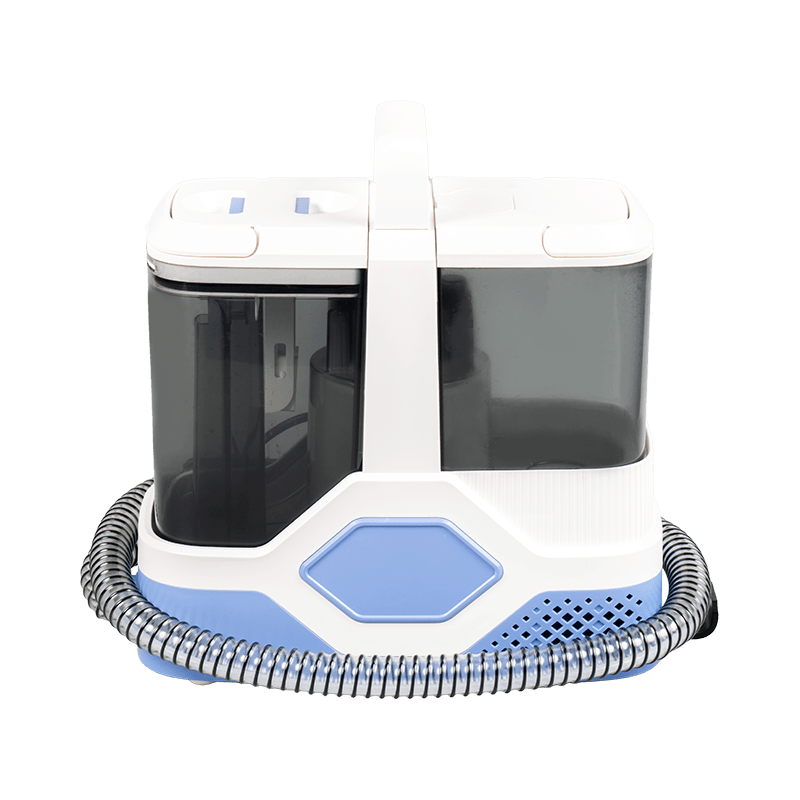 DY-511 Professional Cold-Water Carpet and Sofa Spot CleanerLarge-tank upholstery spot cleaner with 16±1kPa suction, 2300ml/1200ml tanks and optional self-cleaning for sofas, chairs and car seats.View Product →
If you are comparing units for a large home, a rental fleet, a small cleaning business or a retail brand, it helps to look at the full spot and carpet cleaner range side by side rather than judging on tank size alone. Suction, water recovery and drying performance decide what a machine actually costs you per clean.
So what is the honest answer to how much it costs to shampoo carpet? Most homeowners should expect $35 to $75 per room professionally, or $40 to $80 for a do-it-yourself day with a rental. If you clean more than twice a year, a machine of your own will quietly become the cheapest option you have. Start with a realistic look at your carpet, your schedule and your patience, then choose the route that fits.
 2025-11-12
Industry News
2025-11-12
Industry News
2025-11-12
Industry News
2025-11-12
Industry News
2025-11-12
Industry News
2025-11-12
Industry News

 [email protected]
  +86-13736068086
  No. 2, Zone 1, Hongxi Industrial Park, Chunhu Subdistrict, Fenghua District, Xian City, Shaan Xi Province, China.
  Custom Home Carpet Cleaning Machine/Appliance Manufacturers
 Previous