


 русский
 Français
 Español
 Português
 Deutsch
 عربى
عربى
News
Home / News / Industry News / Cordless Vacuum Cleaner Buying Guide: Suction, Runtime, Weight, and What Actually Matters
A cordless vacuum cleaner that advertises 60 minutes of runtime is quoting its quietest setting, almost always with the motorized floor head switched off. Run the same machine on maximum suction and expect 10 to 15 minutes per charge. Neither number is a trick; together they describe exactly what the machine is for. Here is the short version of this guide: match the motor, the battery and the form factor to your floors and your habits, and a cordless vacuum will genuinely replace a corded one for daily cleaning. Buy on peak wattage alone, and it will be living in a cupboard by spring.
At its core, a cordless vacuum cleaner is a battery, a high-speed motor, a fan and a filtration path, arranged so the whole assembly stays light enough to lift with one hand. The motor spins a fan that pulls air through the nozzle; the moving air carries dust with it; cyclone cones or a mesh filter then separate that dust from the airstream before clean air is exhausted.
The most important technical shift of recent years is the brushless digital motor. Brushed motors depend on carbon contacts that wear down and waste energy as heat; brushless motors are driven by an electronically controlled magnetic field, spin beyond 100,000 rpm in better designs, run quieter, and hold their output as the battery drains. When a spec sheet does not state "brushless," it usually is not.
Airflow, cyclone design and filter grade all interact in ways that show up in everyday results, and we walk through the mechanics step by step in our guide to how a cordless vacuum cleaner works.
Marketing numbers are easy to print and hard to compare. Four areas deserve your attention, and they matter in this order.
Spec sheets favor big numbers: watts, kilopascals (kPa), sometimes both. Neither directly measures cleaning. The honest metric is air watts (AW), which combines airflow and suction into a single figure of actual cleaning power; mainstream cordless sticks fall roughly between 50 and 150 AW. Two practical rules follow. First, sustained suction beats peak suction, because a machine that holds its performance as the dust cup fills outperforms one with an impressive five-second spike. Second, the floor head matters as much as the motor: carpet needs a motorized brush roll to agitate fibers and release embedded hair and dust, while hard floors do best with a soft roller head that captures fine debris without flicking it across the room.
Runtime depends on watt-hours, not volts alone. A 21.6V pack at 2.5Ah holds about 54 watt-hours; a 25.2V pack at the same amp-hours holds more and runs longer. Advertised runtimes assume low power and no brush head, so subtract roughly half for realistic mixed use. Check three things: whether the battery is removable, so you can charge one pack while using another and replace it years later instead of replacing the machine; how long a full charge takes, typically three to five hours; and the rated cycle life. Lithium cells usually deliver 300 to 500 full cycles before capacity falls to around 80 percent, which is three to five years of normal household use.
Weigh the machine assembled, not just the body. A 1.4-kilogram body becomes 2.5 to 3 kilograms once the tube, motorized head and battery are attached. Balance matters as much as the scale reading: a machine that carries its weight low feels lighter than a nominally lighter machine that is top-heavy. If you clean stairs, curtains or ceiling corners, rehearse that lifting motion before you commit.
The table below sums up the gap between what spec sheets measure and what you should actually verify.
| Spec on the box | What it actually tells you | What to verify instead |
|---|---|---|
| Rated power (W) | How much energy the machine draws, not how well it cleans | Air watts (AW) or suction measured at the floor head |
| Runtime (min) | Normally the quietest mode, brush head off | Max-mode runtime with the motorized head running |
| Suction (kPa) | Sealed-nozzle pressure under lab conditions | Suction after 15-20 minutes with a loaded dust cup |
| Weight (kg) | Often the body only | Fully assembled weight, plus weight in handheld mode |
| Charge time (h) | Wall socket to full charge | Whether the pack is removable, so you can swap instead of wait |
Most homes are best served by a convertible design: a stick vacuum for floors that detaches into a handheld unit for everything above the floor. Before choosing, walk through your home and count the surfaces, including bare floors, rugs, deep carpet, stairs, upholstery, curtains and the car parked outside. Deep carpet demands that motorized brush roll; hard floors favor the soft roller; everything else is handheld territory.
Our own cordless line splits along exactly this line. The DY807A is a handheld multifunctional all-in-one, ultra light and built for the surfaces a floor machine reaches badly: stairs, sofas, car seats and tight corners.
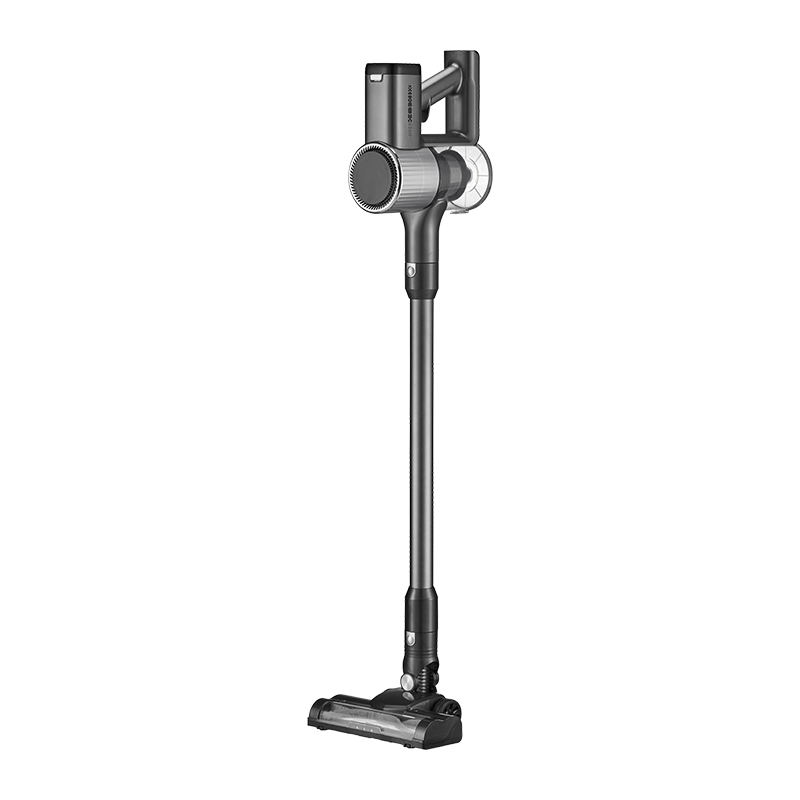 DY-807A Ultra-Light Handheld Multifunctional Cordless Vacuum CleanerWith a 250W BLDC motor, 10-28KPa suction and a 2.3kg body, this handheld handles stairs, sofas, car seats and tight corners that floor machines reach poorly, making it a natural pairing with the upright models discussed here.View Product →
The DY809A covers the other half of the job: an ultra-light wireless upright made for high-frequency, floor-first daily cleaning, where low weight and efficiency decide whether the machine gets used at all.
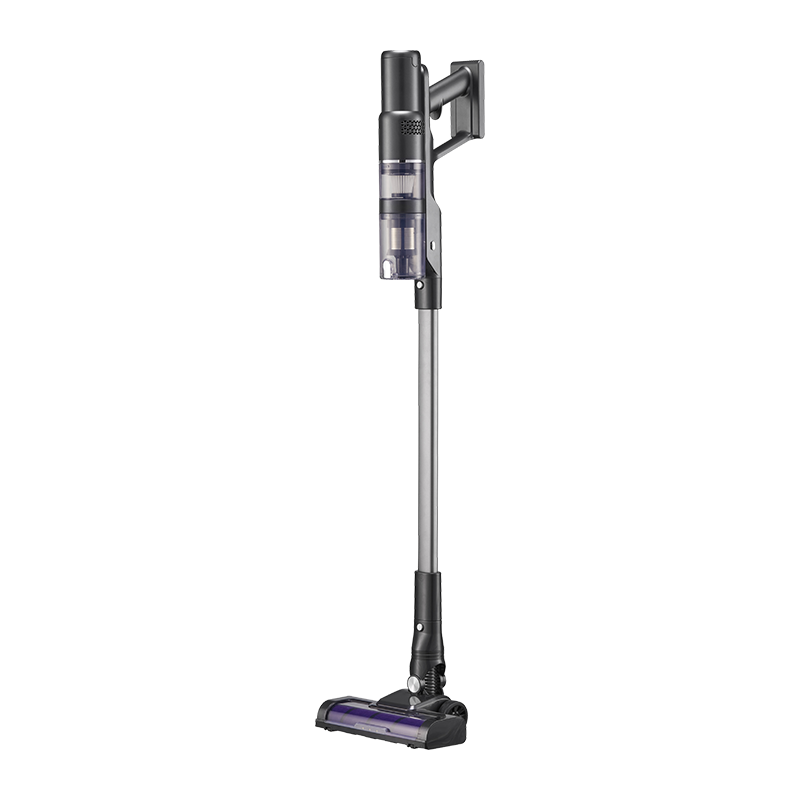 DY-809A Ultra-Light Wireless Upright Vacuum CleanerPowered by a 200W BLDC motor with 11-25KPa suction, quiet operation and a 2.64kg frame, this wireless upright is built for high-frequency, floor-first daily cleaning where low weight and efficiency matter most.View Product →
Car interiors are the hardest environment a vacuum faces: tight crevices, fabric seats, grit worked into carpet, and no wall socket in sight. A low-power rechargeable handheld with a brushless motor, a crevice tool and enough suction for embedded grit handles this far better than any full-size machine, which is why we built the DY109B as a dedicated rechargeable handheld for car use.
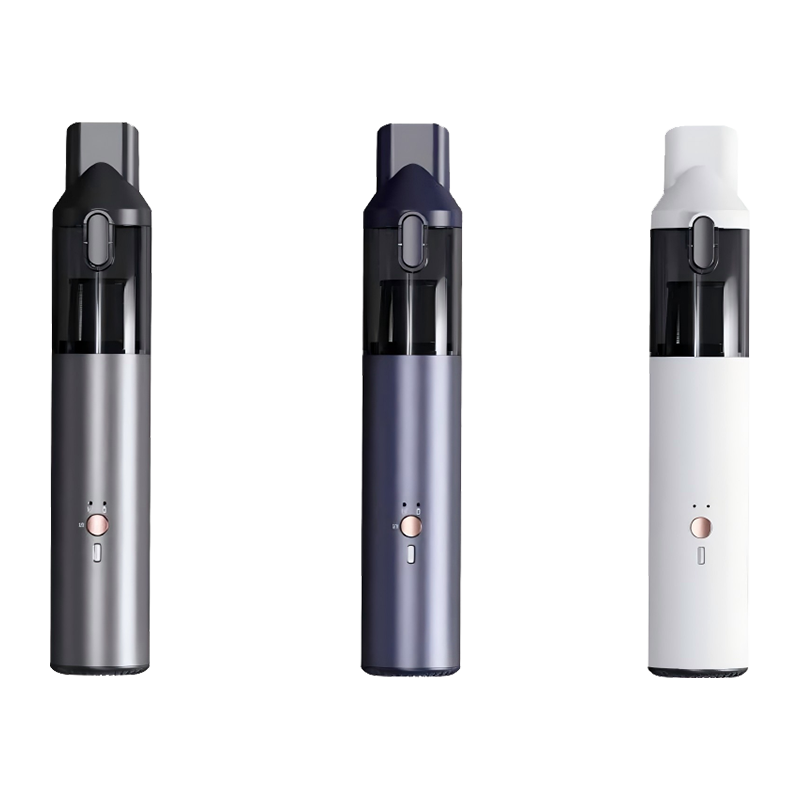 DY-109B Brushless Rechargeable Handheld Car Vacuum CleanerWeighing just 0.6kg with a 100W brushless motor, 13KPa suction and a crevice-friendly design, this rechargeable handheld tackles tight car interiors, fabric seats and embedded grit where full-size machines and wall sockets fall short.View Product →
Fabric surfaces at home follow a similar rule. Surface dust on sofas and curtains is handheld work, but actual stains on a sofa, mattress or rug call for a spot cleaning machine that sprays solution, agitates and extracts it back out. That is a different tool category, and choosing one deserves its own checklist.
A cordless vacuum needs little care, but the care it needs is specific. Empty the dust cup at two-thirds full rather than when it looks full, because an overloaded cup chokes airflow and forces the motor to work harder. Wash filters monthly and let them dry for a full 24 hours before refitting; a damp filter cakes into a solid block. Check the brush roll for wound hair every couple of weeks. The battery rewards good habits most of all:
For a household purchase, five checks separate a good cordless vacuum cleaner from an expensive mistake: confirm the motor is brushless; confirm the battery is removable; ask for air watts or measured suction rather than input wattage; make sure the floor head includes a motorized brush roll if you have carpet; and lift the fully assembled machine before buying, not just the body.
For importers, e-commerce sellers and brand owners, add a procurement layer: certifications matched to your target market, such as CE for the European Union, ETL for North America, GS for Germany, plus RoHS and REACH chemical compliance, and a manufacturer prepared to customize configuration, appearance and packaging. We have manufactured cleaning appliances since 2019 in an 18,000-square-meter digital facility, and customization is a standard part of our cordless and portable lines rather than a special request.
If you want a step-by-step framework for comparing models, our complete cordless vacuum cleaner guide walks through the decision in the order that changes day-to-day results the most, starting with the floor head and ending with the warranty behind the battery.
 2025-11-12
Industry News
2025-11-12
Industry News
2025-11-12
Industry News
2025-11-12
Industry News
2025-11-12
Industry News
2025-11-12
Industry News

 [email protected]
  +86-13736068086
  No. 2, Zone 1, Hongxi Industrial Park, Chunhu Subdistrict, Fenghua District, Xian City, Shaan Xi Province, China.
  Custom Home Carpet Cleaning Machine/Appliance Manufacturers
 Previous